
Ypsilanti Previous Residents by Era
Each source covers a different slice of a house history. The county parcel record is a current starting point, while recorded instruments supply the ownership sequence. Dated directories, newspapers, maps, and census material can add the household and building layers. Start at the era closest to the question, then work outward. A missing year is a gap to document, not an invitation to fill with a likely name.
| House-history source | Years it covers | Where held | What it can show |
|---|---|---|---|
| Washtenaw County parcel lookup | Current data; historical cutoff not located | County online parcel system | Taxpayer, mailing, parcel, assessment, legal, and sales fields |
| Register of Deeds index | Online cutoff not located | Washtenaw Register of Deeds | Recorded instruments, parties, and Liber-Page references |
| Ypsilanti directories | 1874-1977 in city survey; YDL from 1913; other runs through 2001 vary | YDL, AADL, EMU, and GSWC | Dated household, street, classification, and some address listings |
| Sanborn maps | 1884, 1888, 1909, 1916, 1921, 1924; Library of Congress item for 1927 | Libraries, city survey, and Library of Congress record | Building footprint, use, construction detail, and street context |
| YDL newspapers | 1864-2010 microfilm | Ypsilanti District Library | Announcements, obituaries, business, and address context |
| Michigan state census leads | 1827, 1834, 1845, 1850, 1870, and 1894 index | Library of Michigan guide and repositories | Early household clues and research leads |
These are sources for past households, not interchangeable proof. Begin with the parcel and instrument trail for property questions, then use dated local material to test who a publisher or census recorded at the address.
Ypsilanti Previous Residents Through Deeds
A chain of title is the sequence of recorded transfers, not a list of everyone who lived in a house. Follow it one instrument at a time. The county Register of Deeds says its online index is a guide to the underlying document and recommends spelling variations. The public portal’s full form was blocked by human verification during research, so its exact filters and online cutoff have not been stated. Use the index for the reference, then obtain the document or request help from the custodian when needed.
- Take the current parcel number, legal description, and latest sales-history reference from the county report.
- Search the Washtenaw Register of Deeds index for the recorded parties and preserve the date, instrument type, parties, and Liber-Page or document reference.
- Identify the prior grantor named in that instrument, then search that party as the next link backward. Check initials, spelling variants, and former names.
- Repeat the sequence while recording each gap. A split parcel, combined parcel, estate, or changed street form can interrupt an apparent chain.
- When the free index is not enough, use the county’s counter or mail copy request. The form asks for the document type, page count, Liber, Page, and certification count.
- Grantor / grantee
- The grantor transfers an interest in the document; the grantee receives it. Either party can be a useful search bridge.
- Chain of title
- The linked sequence of recorded conveyances for a parcel. It shows recorded property interests, not household membership.
- Legal description
- The deed or parcel’s formal land description. It is more durable than a street number when names, lots, or addresses change.
- Liber-Page
- A volume-and-page reference used to locate a recorded instrument in older deed-record systems.
For a complementary search view, open the FamilySearch Michigan wills and deeds collection.
The collection can supply a lead, but compare it with the Washtenaw custodian’s recorded instrument and the parcel’s legal description before treating it as part of a chain.
Ypsilanti Newspapers and Census Clues
Recorded owners are only one part of the earlier household. Ypsilanti directories can add a name, street, classification, and sometimes an address for the year a publisher listed it. The city survey identifies directory coverage from 1874 to 1977. Ypsilanti District Library’s Heritage Room holds directories dating to 1913, while cataloged holdings through 2001 vary by year, with no listed Ypsilanti publication for 1992 through 1995. Read neighboring available years instead of assuming an annual run is complete.
- Locate the street and house number in the nearest available directory, and transcribe the name, spelling, initials, abbreviation, and source year.
- Check the next available directory before and after that year for a move, different household form, or changed street number.
- Pair the directory clue with the relevant federal or Michigan state census research lead, using the address, neighborhood, family details, and date to distinguish similar names.
- Test the result against the parcel, deed, newspaper, cemetery, or vital source that best answers the remaining question.
For the collections themselves, use the Ypsilanti city directory collections; the address trail here stays focused on one property moving backward. A missing directory entry does not prove a house was vacant or that a person left town.
See the Ypsilanti District Library genealogy and local history resources for the local-history access route.

The library’s local-history network adds directories, newspaper resources, digital collections, and database guidance. Some materials require use in the library, including Ancestry access on a library computer.
Lawful use. Use Ypsilanti house-history records for family history, property history, civic questions, or personal curiosity. Do not use a past-resident trail to stalk, harass, threaten, or expose a living person.
Start Ypsilanti History with a Parcel
Use the Washtenaw County Parcel Lookup to anchor an old-house search to a present parcel number and legal description. For an address, enter the number and the street name alone, such as Main rather than Main St, and choose City Of Ypsilanti when appropriate. The report distinguishes the property address from the taxpayer mailing address, which matters when tracing past households. A current taxpayer can be an owner, estate, organization, or mailing contact rather than an occupant.
Save the exact address form, parcel number, municipality, legal description, and sales-history clues before changing search modes. The sales report can include a Liber-Page, sale date, instrument, and sale price. Those elements lead to recorded conveyances far more reliably than an address typed into a party index.
Old Names in Ypsilanti Address History
Past residents can disappear from a simple search because the street form changed. Local historical research records three Mill Streets on an 1859 map, later associated with Forest, Maple, and Park. Arcadia became Arcade, while Ainsworth Place became Middle Drive. Old Michigan Street was discontinued on June 5, 1916, to avoid confusion with Michigan Avenue. These are address variants to investigate, not a citywide conversion key.
Test the old name, current name, direction, suffix, nearby cross street, plat, and legal description. Compare dated maps and directories before joining a historic label to a modern parcel. This Ypsilanti complication is especially important when a house history has a convincing street name but no matching modern number.
Note: Record the address exactly as each source printed it, then describe any proposed modern match as an interpretation supported by the map, plat, or legal description.
Ypsilanti Past Households and Maps
Sanborn maps place a household clue in physical context. The city survey identifies Ypsilanti map years of 1884, 1888, 1909, 1916, 1921, and 1924. The Library of Congress catalogs a February 1927 Ypsilanti volume with 27 sheets. A sheet can show the outline, material, height, use, and street context of a structure. It cannot name each person who lived there or prove title.
Pair the map year with a directory and a recorded reference. A building shown on a map can support the conclusion that a structure existed when a directory listed the block. It cannot establish that a named person occupied the building. Keep the map sheet number and date with the research notes.
Ypsilanti Archives for Past Households
The Ypsilanti Historical Society archives broaden an address trail beyond deeds and directories. Its categories include tax-assessment rolls, telephone directories, city and township material, maps, newspapers, obituaries, location and street files, family material, photographs, and yearbooks. The archive’s master database is a collection-level spreadsheet, not a name-by-name record index. Search a family, street, item, or location term, then preserve the collection, item, and location reference before asking for a document.
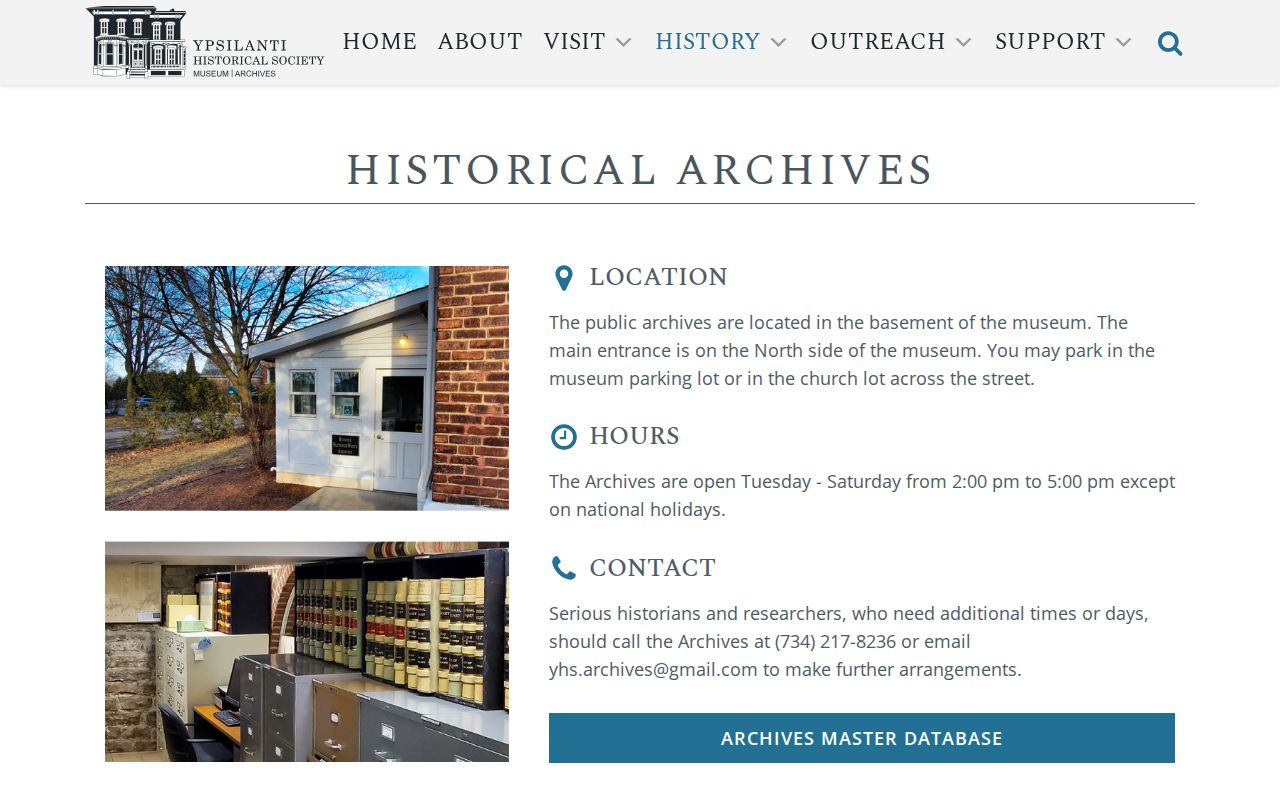
The archive image shows a useful distinction: an archive inventory tells where material is held, while a directory, deed, or parcel record supplies the particular historical fact to verify. Requests can be made in person or through the archive contact after the relevant collection reference is identified.
Ypsilanti Past Households in Print
Newspapers can place a person, business, death notice, move, or family event near an address, but they are secondary reporting rather than an official certificate. YDL’s local newspaper microfilm spans 1864 through 2010. Its Ypsi history resources include Ypsi Genealogy abstracts tied to the Ypsilanti Commercial, whose descriptions overlap as 1864-1898 and 1865-1900. Preserve the exact page, publication, and date because an abstract can omit a correction or repeat an error.
For early household leads, the Library of Michigan’s Washtenaw guide lists Michigan state censuses for 1827, 1834, 1845, 1850, and 1870, plus an index for 1894. It also points to the Ypsilanti Sentinel from 1844-1880 and cemetery inscriptions from 1825-1940. These are finding-aid leads, not a single local-name database.
Open the Library of Michigan Washtenaw County guide when the address trail reaches an early date.
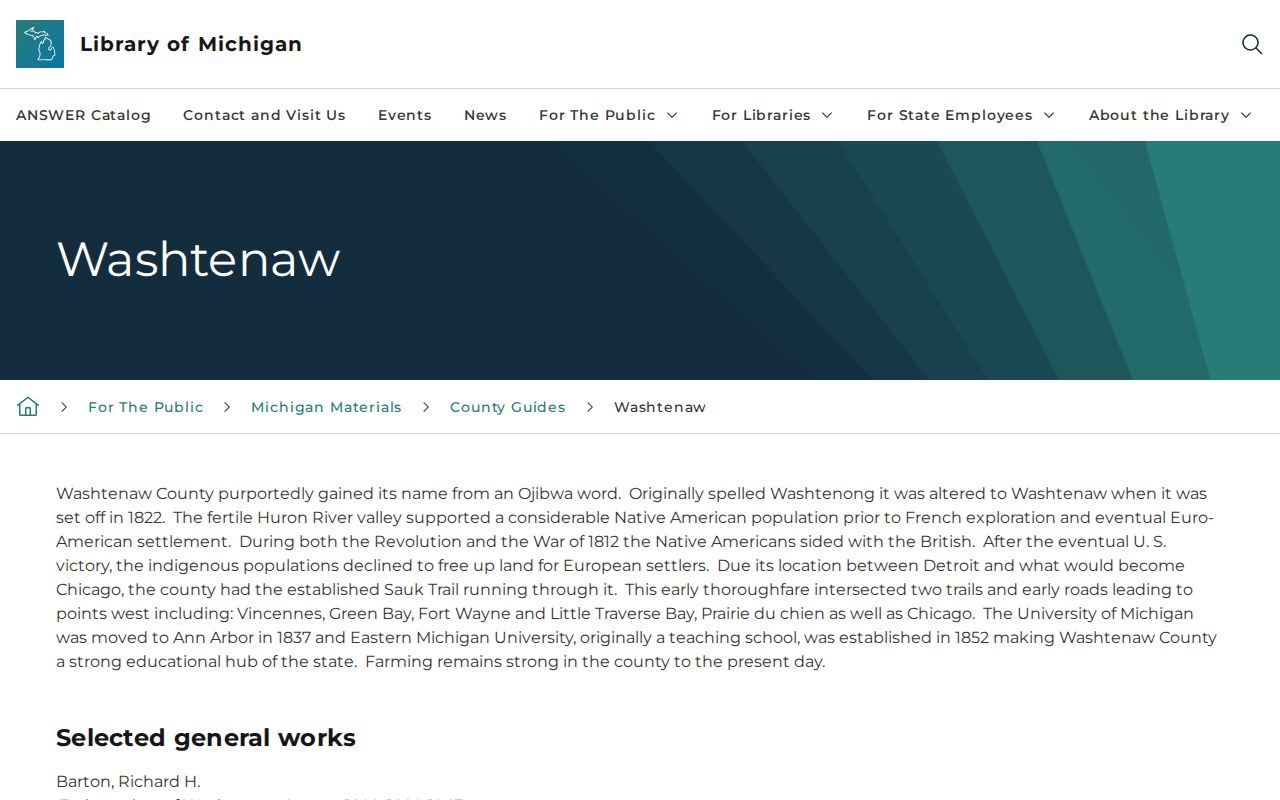
The guide points toward censuses, newspapers, cemetery material, directories, and plats. Its entries identify repositories and collections, so a later request may still need a date, name variation, township, or court clue.
Ypsilanti Past Households Beyond Local Shelves
Some county-level history survives outside an online name index. The Archives of Michigan county-guide collection directs researchers toward tax, naturalization, probate, poorhouse, circuit-case, and occupational materials held at Lansing or partner repositories. These records are not organized as one Ypsilanti resident file. Build a request around the person’s name, date, residence, court, or record type learned from the parcel, directory, or newspaper trail.
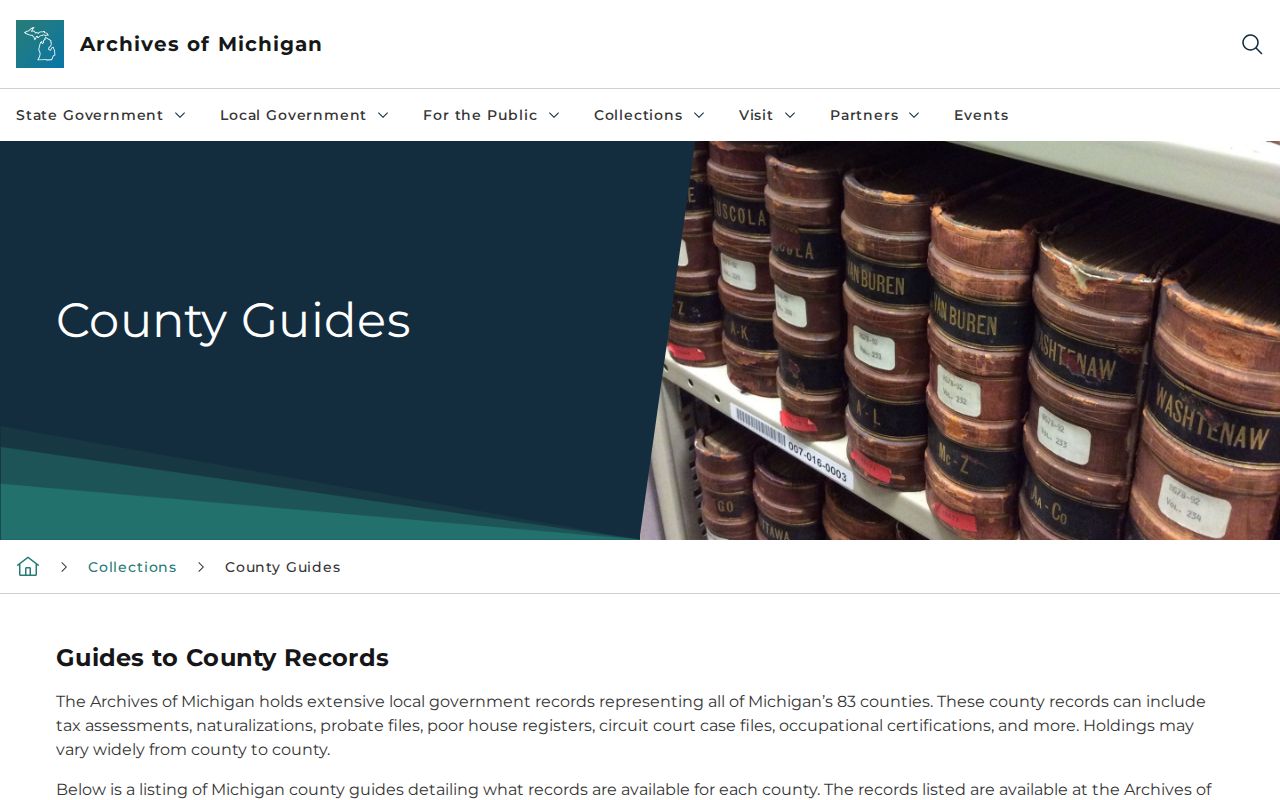
The guide is a repository map rather than proof of a household. It becomes most useful after local records identify a surname variation, date, legal reference, or court connection to carry into a broader archive search.
Limits on Ypsilanti Past Residents
Past-household research should stay narrow and dated. A parcel card can contain a current taxpayer and a separate mailing address. A deed names recorded parties. A directory reports what its publisher printed in a specific edition. A Sanborn sheet records physical context. None is a complete public inventory of people at an address. When records disagree, state the conflict and favor the original custodian’s record for the question it actually answers.
Michigan’s Address Confidentiality Program and other protected records create real limits. Do not attempt to reverse a substitute address or use public material to identify a protected person. A careful history records what the source says, its date, and what it does not establish.